Walk past any modern building — a stylish café facade, an apartment balcony, a plush office lobby — and chances are you've admired louvers without even realising it. Those neat, angled slats running across walls, windows, and ceilings do far more than just look good.
So, what are louvers used for, exactly? In short: louvers control airflow, light, privacy, and weather exposure — while adding serious visual character to a space. From keeping monsoon rain out of a generator room to transforming a plain living room wall into a designer feature, louvers quietly work across homes, offices, and industrial facilities alike.
In this guide, the team at Louver Studio breaks down five essential louver applications — including a few that might surprise you.
Understanding Louvers
Definition of Louvers
A louver is a framed opening or panel fitted with a series of angled slats (also called blades or fins). The slats are positioned so that air and light can pass through, while rain, harsh sunlight, dust, and prying eyes are kept out.
Louvers generally come in two forms:
- Fixed louvers — slats set at a permanent angle, ideal for constant ventilation or decorative cladding
- Adjustable (operable) louvers — slats that tilt open or closed, either manually or with motorised controls
They're manufactured from a range of materials, including aluminium, steel, glass, natural wood, and WPC (Wood Polymer Composite) — a modern favourite that offers the warmth of wood with far better resistance to moisture, termites, and fading.
Interestingly, louvers date back to medieval Europe, where wooden slatted turrets were fitted over kitchen roof openings to release smoke while keeping rain out. The core idea hasn't changed in centuries — the materials and designs certainly have.
Importance in Various Industries
Louvers appear in far more industries than most people expect:
| Industry | How Louvers Are Used |
|---|---|
| Construction & real estate | Facade design, ventilation openings, sun shading |
| HVAC & mechanical | Air intake and exhaust for equipment and plant rooms |
| Interior design | Accent walls, ceilings, partitions, wardrobe shutters |
| Industrial facilities | Ventilating factories, screening noisy machinery |
| Hospitality & retail | Storefront facades, privacy screens, ambience walls |
Now let's look at the five essential applications in detail.
1. Ventilation Louvers: Helping Buildings Breathe
Role in Airflow Management
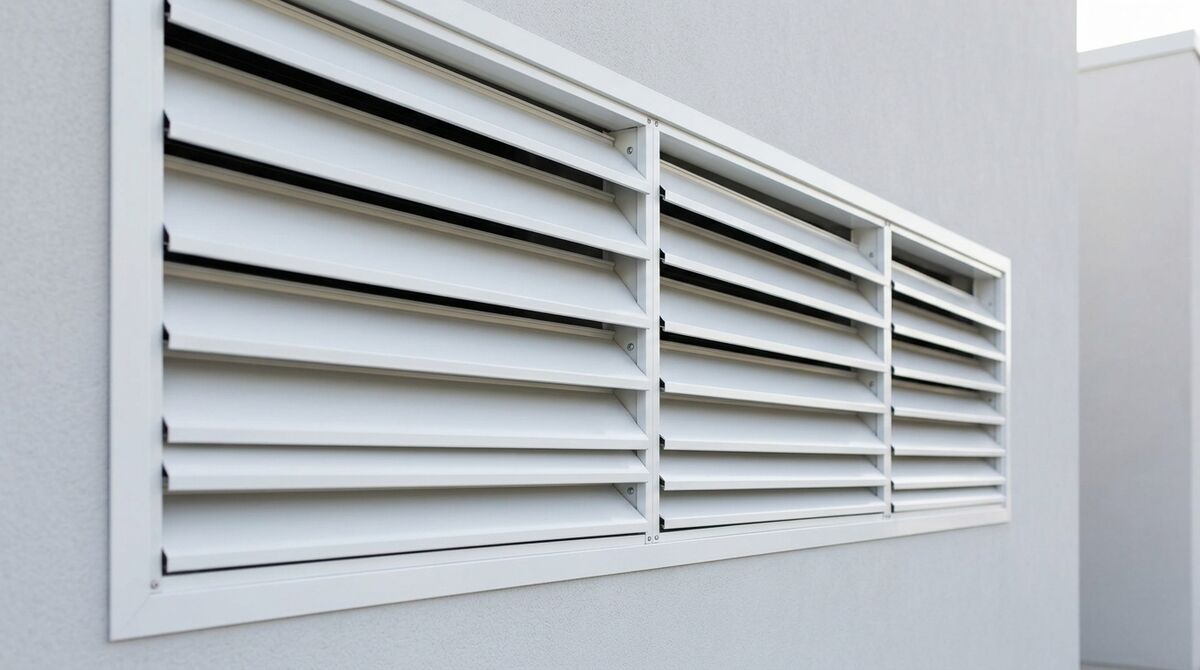
Ventilation is the original — and still most fundamental — answer to what louvers are used for. Ventilation louvers are installed in walls, doors, windows, and equipment enclosures to draw fresh air in and push hot, stale air out, all while keeping rain, dust, insects, and birds outside where they belong.
The angled blade design is what makes this possible. Air flows freely between the slats, but water droplets strike the angled surfaces and drain away instead of entering the building. That's why you'll spot ventilation louvers in:
- Staircases and lift machine rooms
- Basements and parking areas
- Generator, server, and electrical rooms
- Warehouses and factory sheds
- Utility areas, kitchens, and bathrooms
Benefits of Passive Ventilation
Because louvers work without any power, they're one of the simplest tools for passive ventilation — and the benefits add up quickly:
- Lower energy bills: Continuous natural airflow reduces dependence on air conditioning and mechanical exhaust fans.
- Healthier indoor air: Steady air exchange flushes out pollutants, odours, and CO₂ build-up.
- Humidity control: Crucial during the Indian monsoon, when trapped moisture leads to mould, condensation, and musty interiors.
- Cooler equipment: Machinery and electronics last longer when heat can escape naturally.
In a city like Bengaluru, where the weather is pleasant for much of the year, well-placed louvers can dramatically cut how often the AC needs to run.
2. Outdoor Louvers: Style That Stands Up to the Weather
Protection Against Weather Elements
Outdoor louvers act as a building's first line of defence:
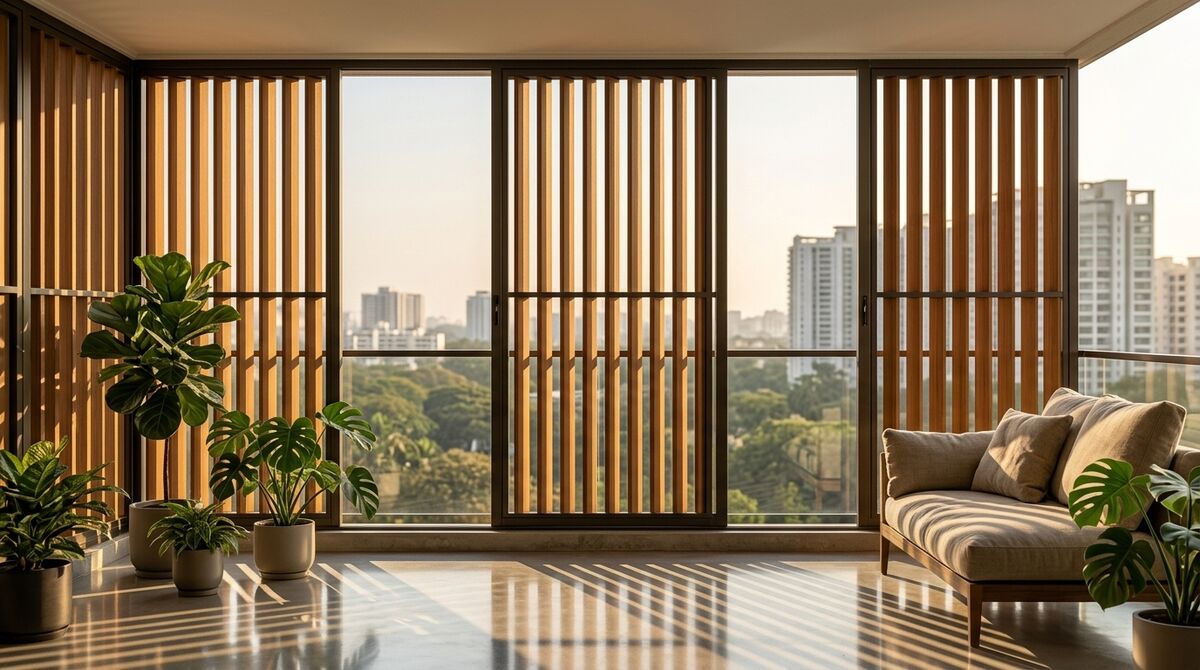
- Rain protection: Angled blades deflect wind-driven rain away from openings, balconies, and semi-open areas — invaluable during heavy monsoon spells.
- Sun shading: Louvers over windows and facades block direct sunlight, reducing indoor heat gain and glare while still allowing daylight through.
- Dust and debris control: Slats filter out leaves, dust, and wind-blown debris before they enter ventilation openings.
Enhancing Building Aesthetics
Here's where louvers have evolved the most in recent years. Exterior louvers are no longer purely functional — they're a signature design element:
- Facade cladding: Fluted WPC louver panels give elevations a premium, textured, high-end look.
- Balcony and terrace screens: Louvers provide privacy from neighbouring buildings without blocking breeze or light.
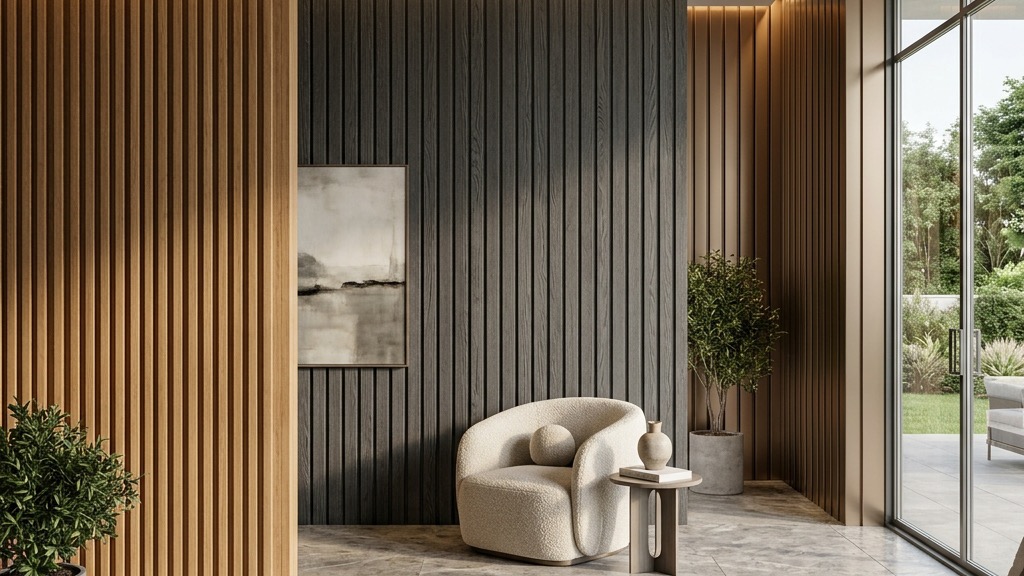
- Gate and compound wall cladding: Charcoal louver panels instantly upgrade entrances.
- Pergolas and garden walls: Weather-resistant louvers create shaded, stylish outdoor zones.
This is exactly why WPC louvers have become so popular for exteriors — unlike natural wood, they don't warp, rot, or attract termites, even after years of sun and rain.
3. Industrial Louvers: The Unsung Heroes of Mechanical Systems
Applications in Mechanical Systems
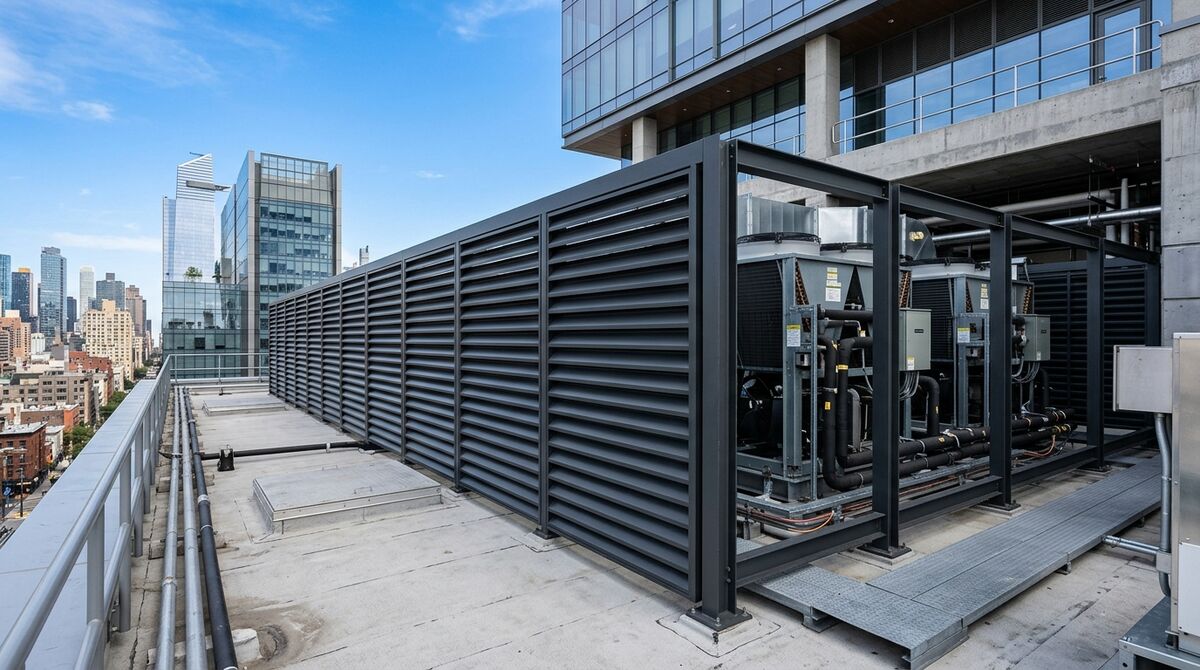
Industrial facilities depend on louvers more than almost any other building type. Common applications include:
- DG and generator rooms: Large intake and exhaust louvers keep diesel generators cool and safely vented.
- Electrical and transformer rooms: Continuous airflow prevents dangerous heat build-up around sensitive equipment.
- Equipment screening: Louvered screens conceal rooftop AC units, chillers, and plant machinery without restricting the airflow those machines need.
- Acoustic control: Specially designed acoustic louvers allow ventilation while dampening the noise of compressors and generators.
Integration with HVAC Solutions
In commercial buildings, louvers are a critical part of the HVAC system itself. They serve as fresh-air intake and exhaust points for air handling units, protect ducts and coils from rain and debris, and are sized carefully (using a measure called free area) so the system receives enough air without excessive resistance.
Get the louver selection wrong, and the HVAC system strains, energy costs climb, and equipment wears out faster. Get it right, and the whole building breathes efficiently.
4. Adjustable Louvers: Control at Your Fingertips
Features and Flexibility
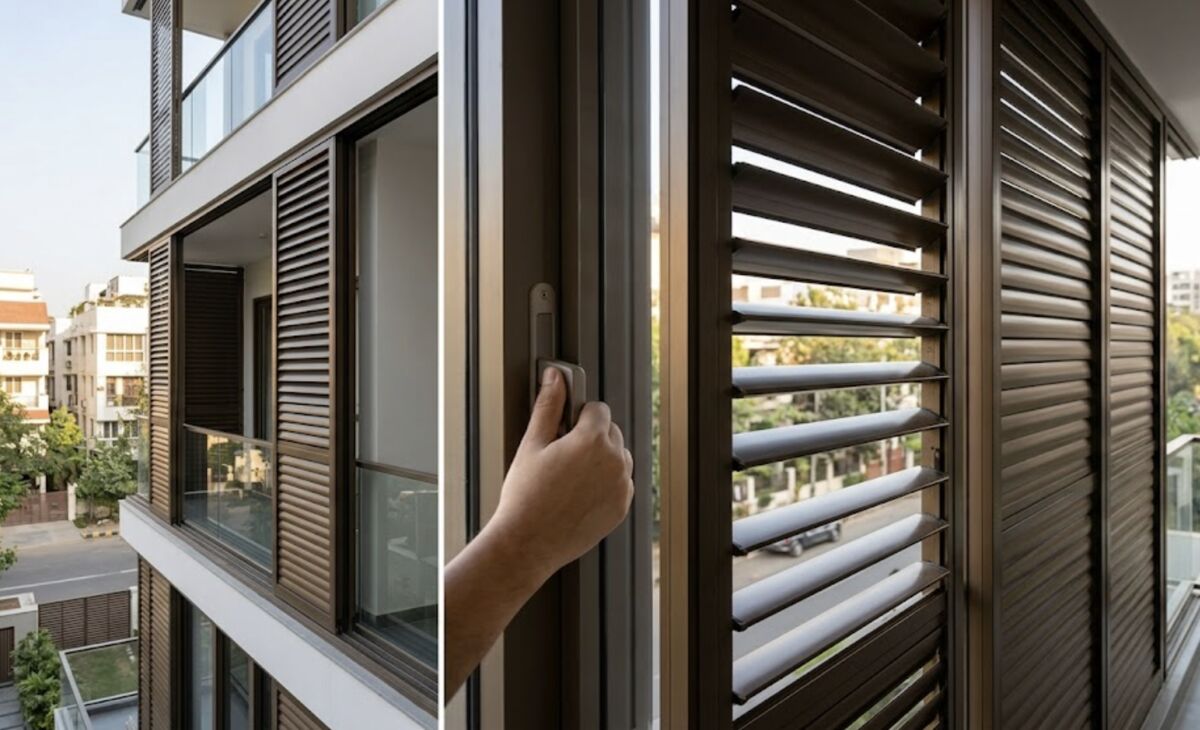
Fixed louvers are set-and-forget. Adjustable louvers put you in charge. Their operable blades can be:
- Opened wide for maximum breeze and daylight
- Angled partially to cut glare while keeping air moving
- Closed fully for privacy, rain protection, or to retain cool air indoors
Operation ranges from simple manual levers to motorised systems that respond to remotes, timers, or even sun and rain sensors in smart-home setups.
Use Cases in Residential and Commercial Spaces
- Homes: Adjustable louvers on windows, balconies, and ventilators let families fine-tune light and airflow through the day — open in the cool morning, angled shut during the harsh afternoon.
- Offices and commercial spaces: Adjustable facade fins and louvered partitions adapt to changing sun angles, keeping interiors comfortable and reducing air-conditioning load.
Many projects combine both types smartly: fixed louvers where constant ventilation or a decorative finish is needed, adjustable louvers where flexibility matters most.
5. Architectural Louvers: Where Design Meets Function
Designing for Functionality and Style
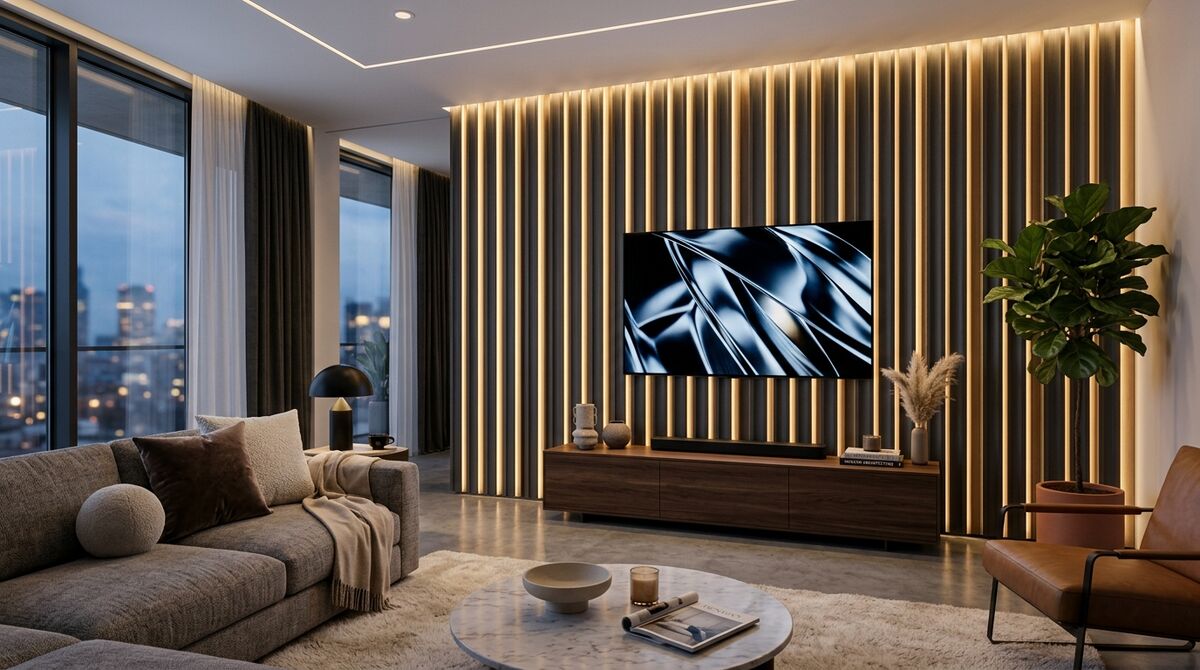
This is the application most people genuinely don't expect — and today, it's the fastest-growing one. Architectural louvers have moved indoors and become a defining element of contemporary interior design:
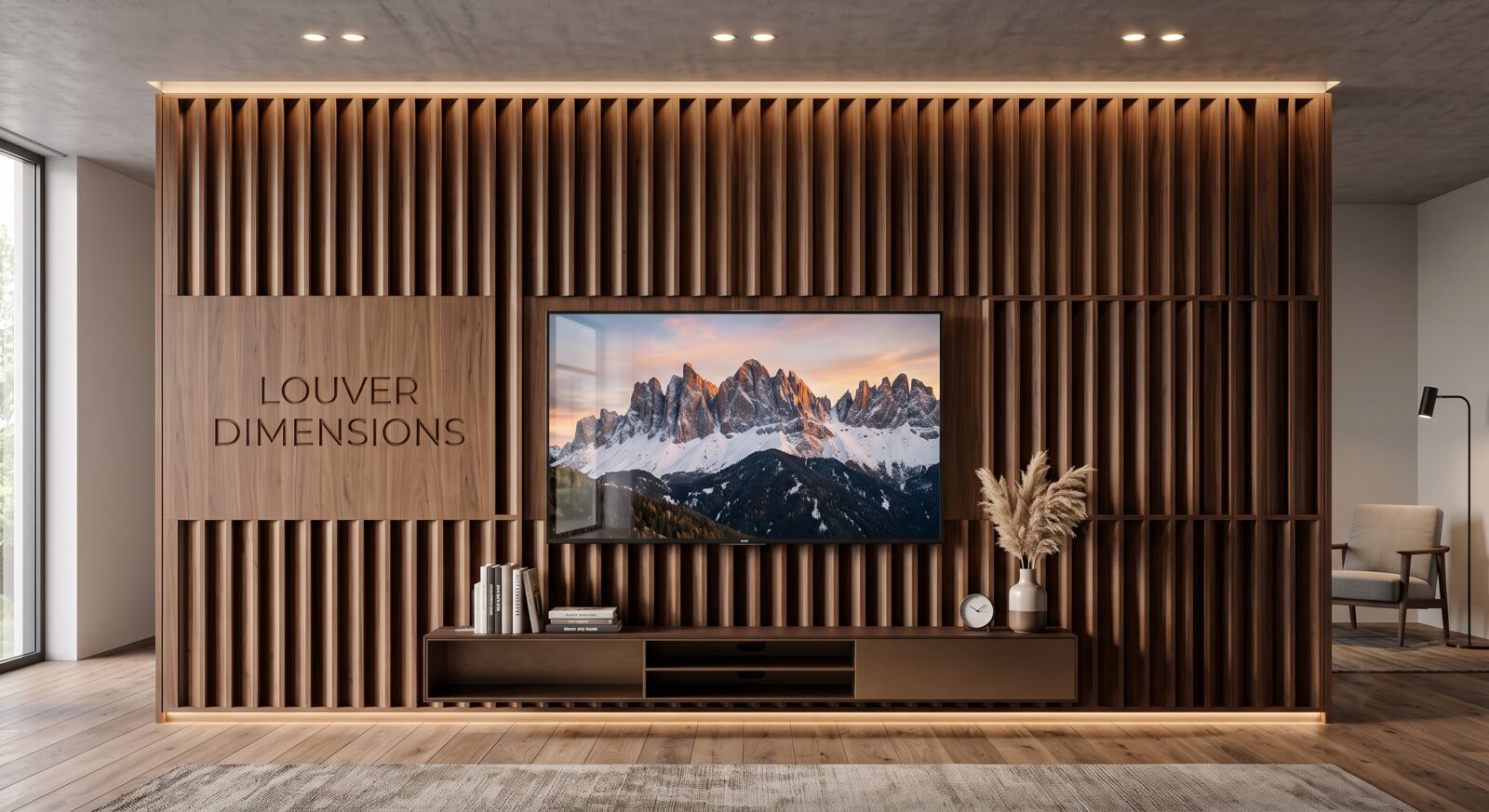
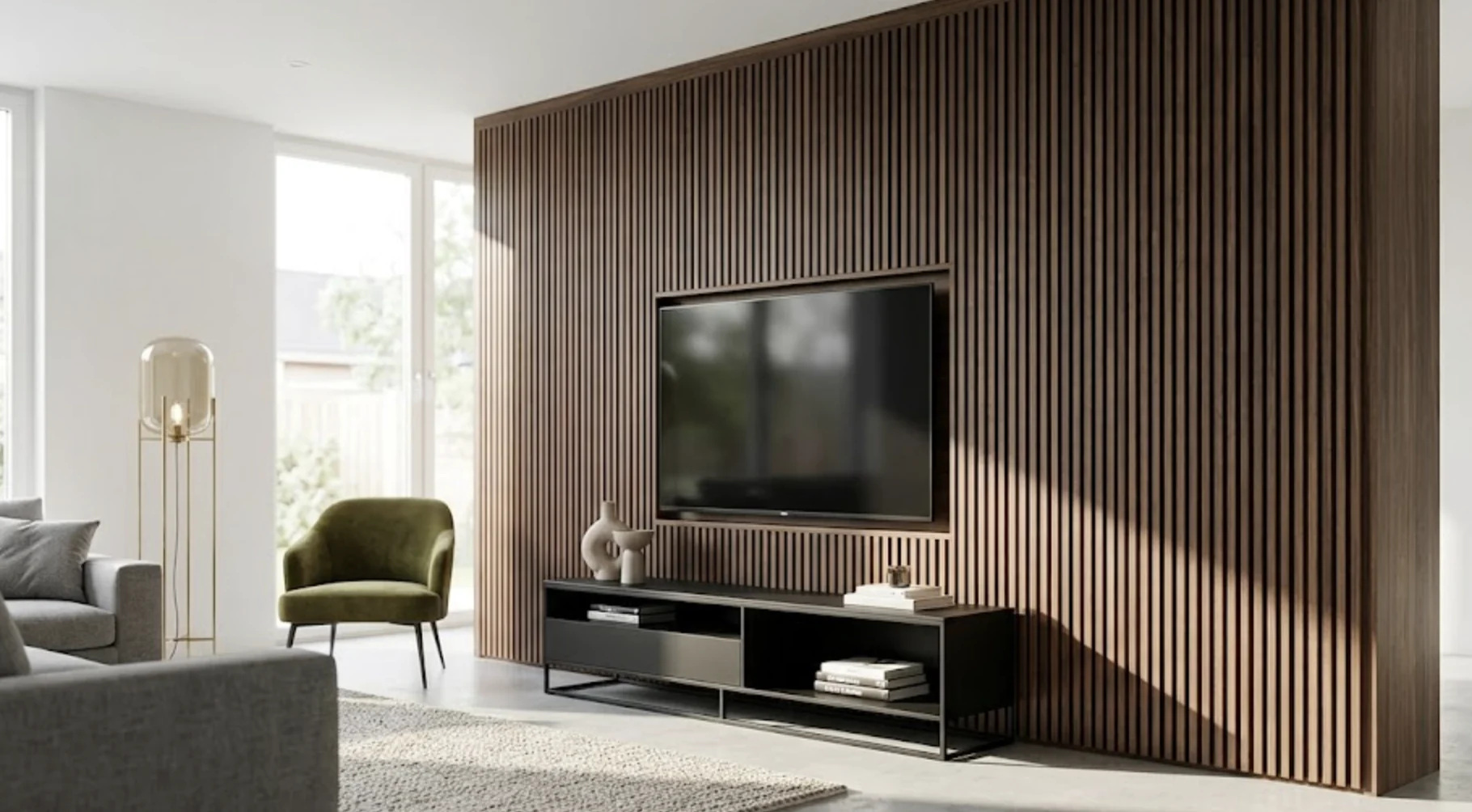
- Accent walls: Vertical louver panels behind TV units, bedheads, and reception desks add rhythm, depth, and a premium finish to plain walls.
- Ceilings: Louvered ceiling rafts bring warmth and texture to living rooms, restaurants, and lobbies.
- Partitions and screens: Louver screens divide open layouts — living and dining areas, pooja corners, office cabins — while letting light and air pass through.
- Integrated lighting: LED strips tucked between slats create a soft, dramatic glow that flat surfaces simply can't match.
Modern WPC louvers and charcoal panels from trusted brands like Century, E3 Clads, and Urodecor come as ready-to-install planks with consistent finishes — which means designers get a flawless, uniform look without the polishing, painting, and maintenance that natural wood demands.
Key Considerations in Louver Installation
Before installing louvers, keep these essentials in mind:
- Purpose first. Ventilation, decoration, or both? This decides blade angle, spacing, and whether you need fixed or adjustable slats.
- Choose the right material. WPC for moisture-prone and termite-prone areas, aluminium for heavy-duty exteriors, wood-finish panels for premium interiors.
- Orientation and spacing. Vertical slats add height; horizontal slats add width. Gap size affects privacy, light, and airflow.
- Surface preparation. Louver panels need a level substrate and proper framing or adhesive for a long-lasting, rattle-free finish.
- Insist on genuine products. Authentic branded louvers carry warranties and hold their colour and shape; cheap imitations fade, bend, and crack within a few seasons.
- Professional installation. Clean joints, hidden fasteners, and precise alignment make the difference between "nice" and "stunning."
Quick Recap: What Are Louvers Used For?
| Application | What It Does |
|---|---|
| Ventilation | Manages airflow, enables energy-saving passive ventilation |
| Outdoor protection | Blocks rain, sun, and dust while elevating facades |
| Industrial & HVAC | Vents equipment rooms, screens machinery, feeds HVAC systems |
| Adjustable control | Lets users fine-tune light, air, and privacy on demand |
| Architecture & interiors | Creates designer walls, ceilings, and partitions |
Frequently Asked Questions
A louver's primary purpose is to allow air and light to pass through an opening while keeping out rain, debris, and direct sunlight. Today, louvers are equally valued as decorative elements for walls, ceilings, and facades.
Not at all. Interior louver panels are one of the biggest trends in modern Indian homes — used on TV walls, bedheads, ceilings, and partitions to add texture and a premium finish.
Fixed louvers have slats set at a permanent angle, making them ideal for constant ventilation and decorative cladding. Adjustable louvers have operable slats you can open or close to control airflow, light, and privacy as needed.
WPC (Wood Polymer Composite) louvers are made from a blend of wood fibre and polymers. They look and feel like natural wood but resist water, termites, warping, and fading — making them ideal for the Indian climate, both indoors and outdoors, with virtually zero maintenance.
Louver panels fixed flat against a wall are primarily aesthetic. However, louvered partitions, screens, and facade systems do allow air and light to flow through — giving you beauty and breathability in one element.
Final Thoughts: Small Slats, Big Impact
Louvers are that rare building element that pulls double duty — engineering and elegance in a single panel. Whether you need to ventilate a generator room, shield a balcony from the monsoon, or turn a bare wall into the highlight of your interiors, there's a louver designed for the job.
Ready to explore louvers for your home or project? Louver Studio is Bangalore's authorized dealer for Century, E3 Clads, and Urodecor — offering genuine WPC louvers, charcoal panels, and fluted cladding with expert guidance and fast delivery. Visit our studio or get in touch today, and let's find the perfect louver for your space.
Back to Blog